Improvement
What Is an Integrated Entrepreneur Platform? | Sapling
What Is an Integrated Entrepreneur Platform?
A New Model for Building Startups
Across startup ecosystems globally, founders face the same fragmented challenges, regardless of where they are building. The tools exist. The capital exists. The ambition exists. And yet, thousands of founders still find themselves asking the same fundamental questions, alone, at 11 pm, with no clear answer in sight.
Who do I talk to about this? Where do I find the right workspace? How do I get in front of the right people? When is the right time to raise money and from whom?
These are not small questions. They determine whether a business survives its first two years or quietly disappears, not because the idea was bad, but because the right support never showed up at the right time.
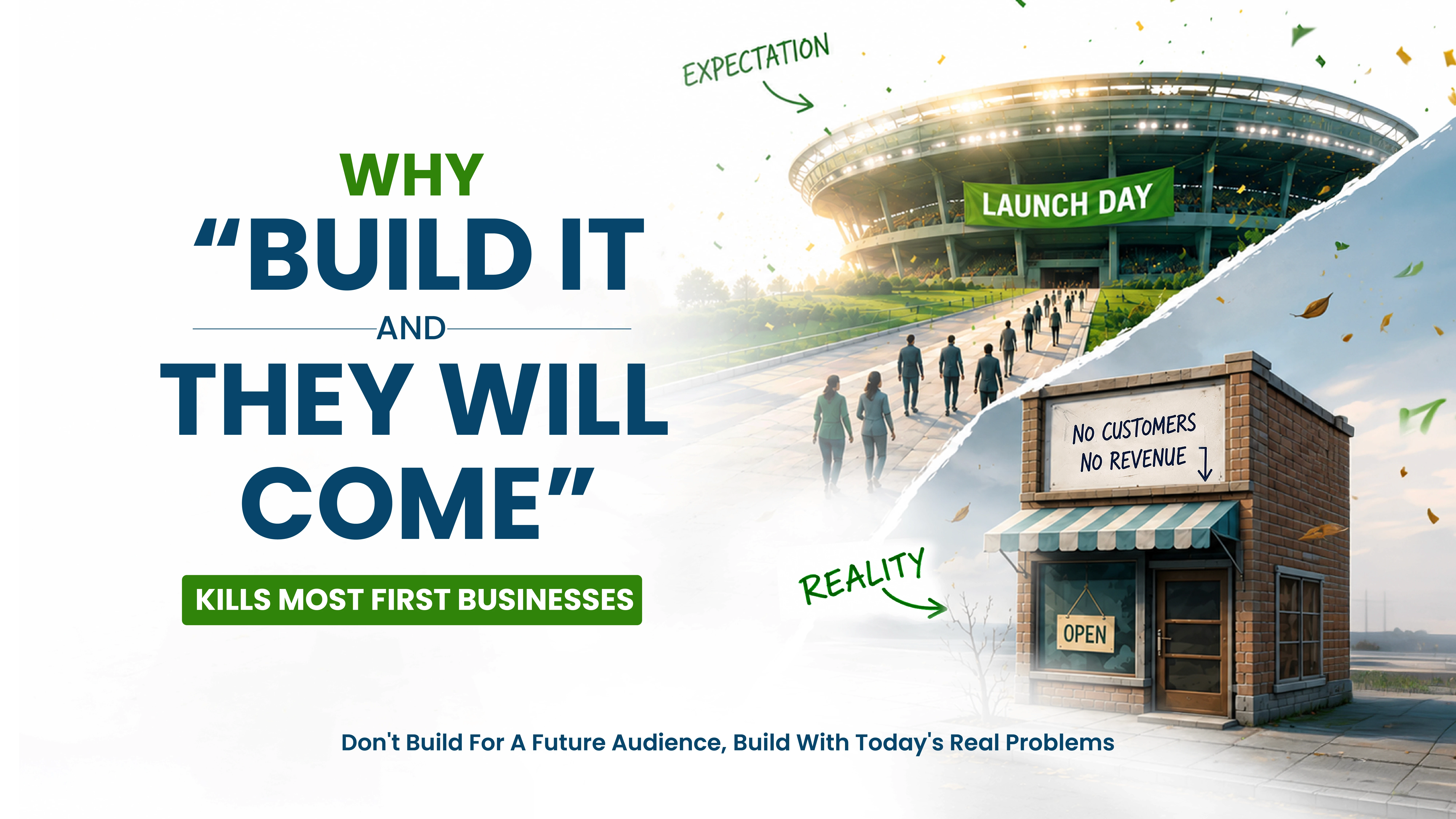
Research consistently shows that most early-stage startups fail not because of product, but because of fragmented execution and lack of aligned support.
At Sapling, we built something to address exactly this. Not an incubator. Not a coworking space. Not a mentorship programme. Something that holds all of it together with intention- an integrated entrepreneur platform.
This post explains what that means, why it matters, and why this model is built for founders at any stage, in any market.
The problem is not local; it is structural
Most founder support systems are built in silos.
You join a coworking space and get a desk. You attend a networking event and collect contacts. You apply to a scheme and receive a certificate. You find a mentor through a connection. You pitch to an investor who asks you to come back later.
Each of these has value. None of them, alone, moves a business forward meaningfully.
The founder is left doing the integration work - stitching together resources, relationships, and advice that may point in entirely different directions. This takes time, energy, and a kind of access that many early founders simply do not have.
This is not a geography problem. It is a structural flaw in how startup support has been designed, built in pieces, not as a system.
First-generation entrepreneurs carry this burden the hardest. People building without the advantage of a family business background, without alumni networks from elite institutions, without a cousin who works in venture capital, are navigating without a map, in terrain that assumes you already know the way. An integrated platform exists to remove that friction, wherever a founder is building.
Why startup ecosystems need integrated platforms
The gap in most ecosystems is not resources, it is coherence.
A city can have fifty coworking spaces, a dozen accelerator programmes, and hundreds of active angel investors, yet still produce founders who cannot connect the dots between them. The infrastructure exists in isolation. The network does not talk to the capital. The mentorship does not account for operational reality. The result is a founder who collects touchpoints but never builds momentum.
This is the core failure of fragmented ecosystems, and it is why integrated platforms represent a structurally different approach. The question is not whether support is available. The question is whether it is designed to work as a system, because systems produce outcomes that individual parts cannot.
How an integrated entrepreneur platform works
Integrated is not a label. It is a design principle.
Everything Sapling offers is built around one conviction: a founder's needs do not exist in isolation, and neither should the support they receive.
The model rests on four pillars - Infrastructure, Network, Guidance, and Funding, and the keyword is and, not or.
Infrastructure is the operational foundation - workspaces, systems, and environments that remove friction and allow a founder to focus on execution rather than logistics.
Network is access - mentors, collaborators, partners, and relationships that open doors a founder cannot open alone. In most markets, who you know still shapes what becomes possible. An integrated platform democratises that access.
Guidance is decision support from positioning and go-to-market strategy to hiring and scaling. Most early founders are making these calls for the first time. Guidance is not about being told what to do. It is about having someone credible in the room when you are deciding.
Funding is capital, not just access to it, but clarity on readiness, structure, and alignment with long-term vision. The right capital at the wrong stage does as much damage as no capital at all.
Individually, each pillar helps. Together, they create momentum.
Without integration: infrastructure without guidance leads to misdirected execution; guidance without infrastructure limits action; funding without a network restricts growth. Integration is what turns support into a system.
If you are building and facing these exact challenges, explore how Sapling works →
A model designed for scale, not geography
Sapling is built in Mangaluru, but designed to support founders across markets globally.
Startups today are not constrained by location, and neither should the platforms supporting them. The focus is on building businesses that scale globally, not within a single ecosystem.
The model is structured to be replicable and adaptable — enabling founders to build, grow, and scale regardless of where they start.
What this looks like in practice
An integrated entrepreneur platform is not a product or a fixed programme. It is an evolving relationship.
Founders are not placed into standardised cohorts or fixed timelines. The support adapts to their stage. Early on, that might mean workspace access and a thinking partner for validating an idea. As the business grows, the focus shifts to distribution, brand strategy, hiring, and capital readiness.
The goal is never dependency. The goal is independence, founders who can operate with clarity, capability, and access, and who no longer need the scaffolding because they have become the structure.
This is what it means to build businesses, not just support them.
The broader picture
The fragmented support model will continue to exist - coworking spaces, one-off events, government schemes, and isolated mentorship. All of it has its place.
But the next generation of resilient businesses will be built differently. They will require connected systems, where infrastructure, people, strategy, and capital work together rather than in parallel. Not because that is a nice idea, but because the compounding effect of integration is what allows early-stage companies to survive the moments that break most of them.
This is the model Sapling is building. Built in India. Designed for scale.
If you are a founder at the idea stage, in operation, or ready to grow, and you are navigating these questions alone, we would like to be part of the journey. Not just with a desk or a contact or a workshop. With all of it, working together, built around you.
Sapling Multi Ventures is an integrated entrepreneur platform supporting founders across stages - delivering Infrastructure, Network, Guidance, and Funding as one connected system, not in silos.
Related